Sub-Total: $0.00
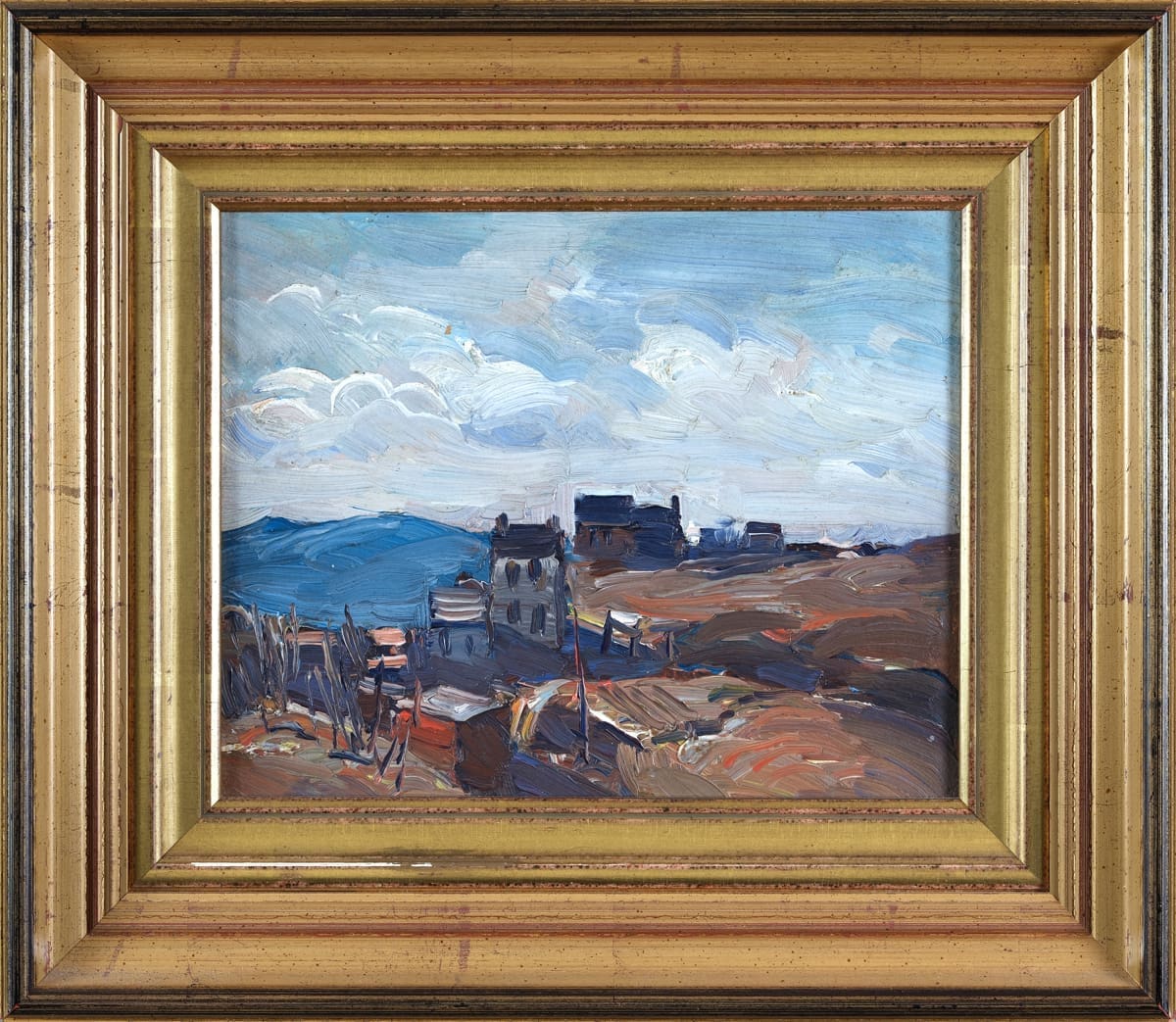
Folinsbee’s “Easton Hills”
Title “Easton Hills”
Included in the John Folinsbee Catalogue Raisonee
Type O/B
Year 1940’s
Size 8″ x 10 1/4″
Signed LL under edge of frame
Letter Of Authentication From Michelyn Gallery in Doylestown, Pa.
Price On Request
Description
John Fulton Folinsbee (1892–1972)
Forceful Realist of the New Hope School
Early Life & Education
John Folinsbee was born in Buffalo, New York, in 1892. At the age of nine, he contracted polio, which left him wheelchair-bound for the rest of his life. Despite this challenge, he pursued art with determination and studied at the Art Students League of New York and later at the Pennsylvania Academy of the Fine Arts. Among his early influences were the Tonalists and Robert Henri’s Ashcan realism.
Arrival in New Hope & Artistic Identity
In 1916, Folinsbee moved to New Hope, Pennsylvania, becoming a key figure in the Pennsylvania Impressionist movement. His early works reflected a strong impressionistic style, but by the 1930s his art evolved into a more expressive, realist approach. Working en plein air from a specially designed car and boat, he captured scenes of the Delaware River, canal, quarries, mills, and working towns with vigor and honesty.
Folinsbee’s paintings are known for their dramatic lighting, rich color, and bold brushwork. He had a particular affinity for winter scenes, industrial landscapes, and stormy skies—imbuing them with emotional intensity and rugged beauty.
Exhibitions & Recognition
Throughout his career, Folinsbee exhibited at major institutions including the National Academy of Design, where he became a full academician, the Carnegie Institute, and the Pennsylvania Academy. He earned dozens of awards and critical praise, and his works were acquired by prominent public and private collections.
His circle of influence included fellow painters Daniel Garber, Edward Redfield, and Harry Leith-Ross, with whom he shared a passion for depicting the American landscape in its unvarnished form.
Late Work & Legacy
In the 1940s and 1950s, Folinsbee’s palette darkened and his compositions became more structured and introspective, reflecting both personal growth and broader artistic trends. He also created figure paintings and still lifes, further expanding his range.
Folinsbee died in 1972, having painted for over five decades. Today, his work is represented in the Metropolitan Museum of Art, the Smithsonian American Art Museum, the James A. Michener Art Museum, and many others. He is remembered not only for his artistic power but for his perseverance and humanity.
A towering figure in Bucks County art, John Folinsbee remains a testament to artistic resilience and the expressive strength of American realism.