Sub-Total: $0.00
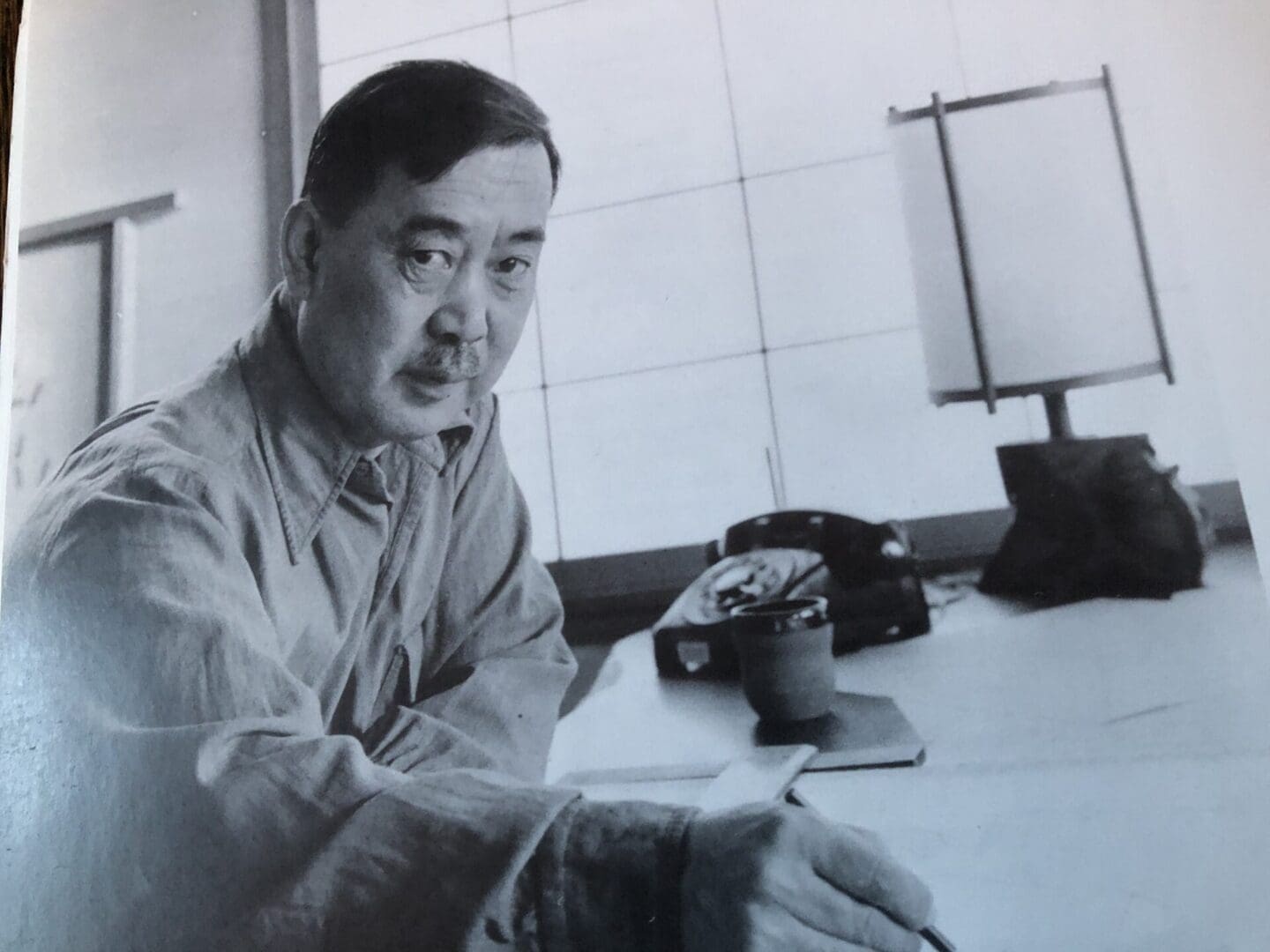
George Nakashima
Description
George Nakashima (1905–1990)
Master of Organic Modernism and Sacred Craft
Early Life & Education
George Nakashima was born in Spokane, Washington, in 1905 to Japanese immigrant parents. He earned a degree in architecture from the University of Washington and later a master’s degree from MIT. Nakashima traveled extensively through Europe, North Africa, and Asia, spending formative years in Japan and India, where he studied traditional architecture and woodworking.
His deep spiritual and philosophical exposure—particularly to Vedic and Zen teachings—would shape his approach to design and craftsmanship, blending Eastern and Western ideals into a singular artistic vision.
Internment & Turning Point
In 1942, during World War II, Nakashima and his family were interned at the Minidoka War Relocation Center in Idaho. There, he met a Japanese carpenter who taught him traditional Japanese joinery. This time of adversity became a turning point in his artistic life, deepening his commitment to working with natural materials and honoring the spiritual potential of craft.
After his release, facilitated by architect Antonin Raymond, Nakashima relocated to New Hope, Pennsylvania, where he established his studio in 1945.
Philosophy & Craftsmanship
George Nakashima became one of the most influential figures in the American Studio Craft movement. He rejected mass production, instead embracing the philosophy of wabi-sabi—the appreciation of imperfection and impermanence. His furniture designs celebrated the individuality of each slab of wood, particularly American black walnut, cherry, and maple.
He often left natural edges, knots, and flaws visible, using butterfly joints to stabilize splits and enhance beauty. His signature pieces include large slab tables, benches, and cabinets that merged utility with spiritual depth.
For Nakashima, woodworking was a meditative and ethical act. He believed in giving new life to fallen trees and considered each piece of furniture a collaboration with nature.
Recognition & Legacy
Nakashima’s work received international acclaim. He exhibited at the Museum of Modern Art, collaborated with Knoll and Widdicomb-Mueller, and completed major commissions, including furniture for UNESCO’s headquarters in Paris. His writings, especially “The Soul of a Tree,” articulate his deep reverence for craftsmanship and nature.
Today, the Nakashima Studio in New Hope remains active, overseen by his daughter, Mira Nakashima, who continues his legacy. His furniture is held in major museum collections, including the Metropolitan Museum of Art, the Philadelphia Museum of Art, and the Smithsonian Institution.
Legacy
George Nakashima’s work transcends furniture design. It embodies a spiritual philosophy of making—where each joint, grain, and surface is an expression of humility, reverence, and connection to the earth. He is widely regarded as one of the greatest American woodworkers and a guiding force in 20th-century design.
His legacy lives on not only in his enduring creations but in the values he championed: sustainability, integrity, and the belief that art and craft are inseparable from the human spirit.
NewJerseyPennsylvaniaArt.COM