Sub-Total: $0.00
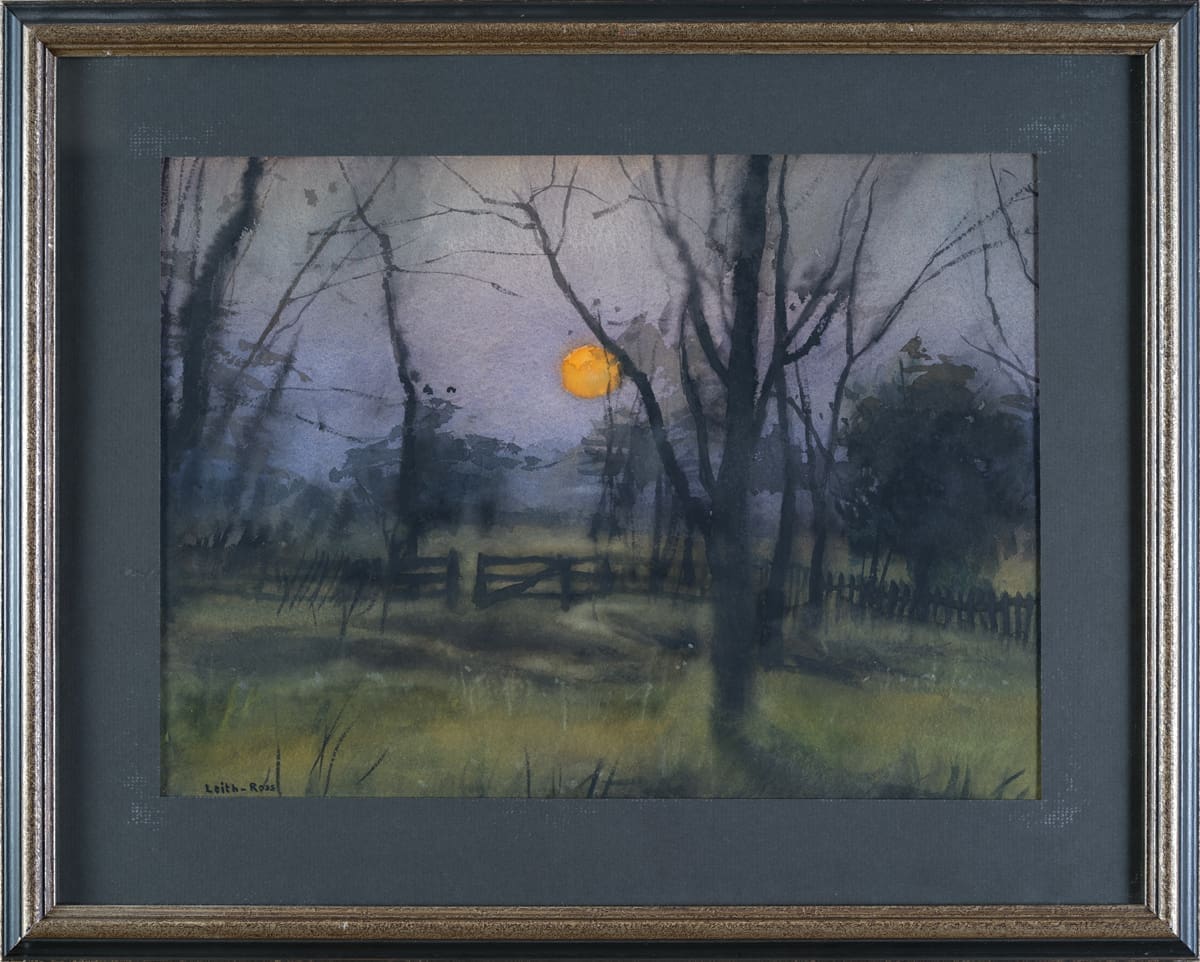
Leith-Ross’ “Moon Rise”
Title: “Moon Rise”
Type: Watercolor
Size: 11 1/2″ x 15″
Signed: LL
Price On Request
Description
Harry Leith-Ross (1886–1973)
Painter, Teacher, and Chronicler of Bucks County Art
Early Life & Education
Harry Leith-Ross was born in Mauritius in 1886 to Scottish parents and was raised in England. He studied engineering in London and later pursued art at the Académie Delécluse in Paris and the Art Students League in New York. His early education combined technical precision with a deepening appreciation for composition and light.
He came to the United States in the early 1900s and eventually settled in Pennsylvania, becoming one of the most respected members of the Pennsylvania Impressionist movement. His artistic direction was shaped by his experiences studying with and painting alongside John F. Carlson at the Woodstock art colony in New York.
Bucks County & The New Hope School
Leith-Ross moved to New Hope, Pennsylvania, in 1935, fully immersing himself in the Bucks County art colony. His paintings—particularly landscapes and village scenes—reflected his love for the architecture, hills, and seasons of the Delaware River Valley. Unlike some of his more dramatic contemporaries, Leith-Ross favored quiet harmony and gentle light, emphasizing structure and atmosphere over flourish.
His work combined Impressionist light with a careful, almost poetic order. Winter scenes, barns, river views, and townscapes were rendered with lyrical clarity, creating deeply resonant images of rural Pennsylvania.
Teacher, Writer & Legacy
Leith-Ross was not only a prolific painter but also a dedicated teacher. He taught at the University of Buffalo, the Philadelphia Museum School of Art, and various summer art programs. His most lasting contribution to American art history may be his book, “The Landscape Painter’s Manual,” published in 1956, which distilled decades of wisdom in plein air painting.
He also played an important role in preserving the legacy of Bucks County artists, documenting his experiences and peers with affection and accuracy. His friendships with Daniel Garber, John Folinsbee, and Edward Redfield enriched both his life and the regional art scene.
Legacy
Harry Leith-Ross passed away in 1973. His work is represented in the collections of the James A. Michener Art Museum, the Pennsylvania Academy of the Fine Arts, and numerous private collections. Today, he is remembered as one of the finest painters of Pennsylvania’s landscape—an artist who balanced Impressionist inspiration with intellectual clarity and quiet emotional power.
His paintings continue to serve as visual diaries of the Bucks County landscape and life in a bygone but beautifully preserved era.