Sub-Total: $0.00
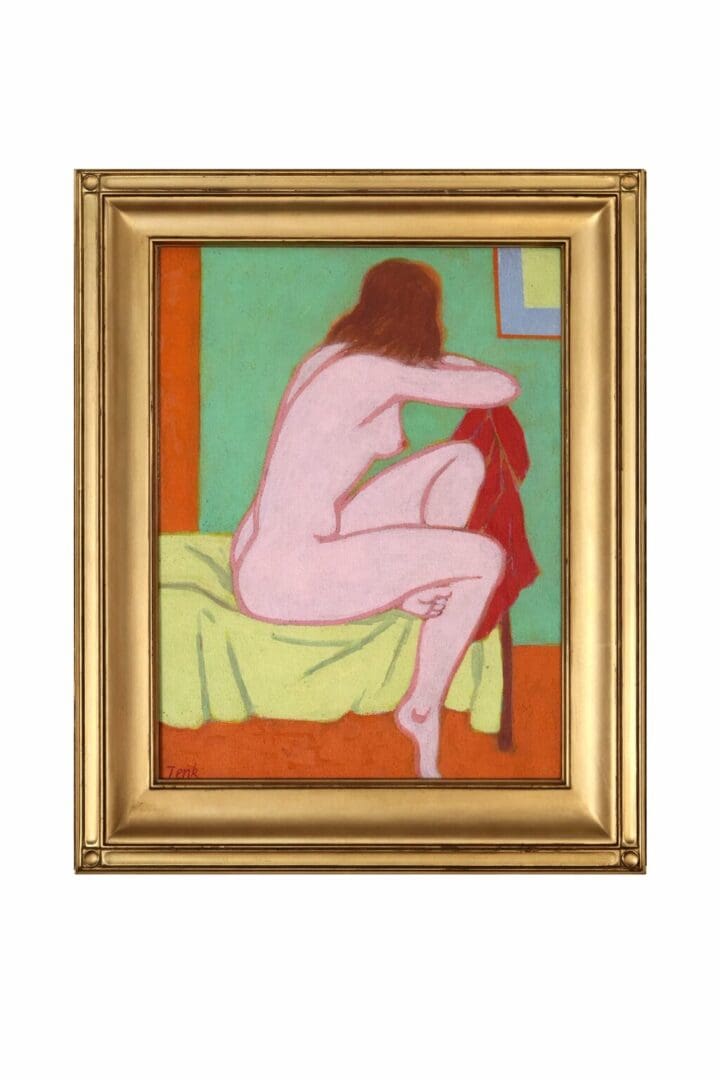
Zenk’s “Nude”
Title “Nude”
Type O/B
Year
Size 16″ x 20 1/4″
Signed SLL
Price On Request
Description
Joseph Zenk (1903–2000)
Joseph Zenk blended traditional and modern influences. Painter of Spirit, Symbol, and Cultural Synthesis
Early Life & Training
Joseph Zenk was born in 1903 in Brooklyn, New York. Raised in a working-class immigrant family, Zenk was drawn to art from a young age. He studied at the National Academy of Design and later at the Art Students League in New York City, where he was exposed to a diverse array of stylistic influences including modernism, surrealism, and symbolism.
Throughout his career, Zenk combined formal academic training with an intense interest in spirituality, cultural mythologies, and human expression, resulting in a body of work that defies simple categorization.
Artistic Style & Themes
Zenk’s paintings are best known for their expressive use of color, fluid line work, and rich symbolic content. His work often explores themes of transformation, ritual, and the connection between humanity and the cosmos. Figures, animals, and dreamlike settings populate his canvases, revealing a deep engagement with archetypal imagery and mystical traditions.
Although Zenk was not formally associated with the Surrealists, his work shares their interest in the subconscious and the poetic. He developed a distinct visual language that incorporated elements of Cubism, German Expressionism, and American folk art. At times both joyful and brooding, his paintings invite introspection and multiple interpretations.
Connection to New Jersey & Bucks County
Later in life, Zenk lived and worked in New Jersey and maintained connections with the broader Delaware Valley art scene. His quiet presence in the region brought a contemplative and deeply individualist perspective to a community more often associated with Impressionism and Realism.
While he never sought the commercial spotlight, Zenk was respected among artists and collectors for his integrity and vision. He exhibited in regional galleries and maintained a devoted following of patrons who appreciated the spiritual and psychological dimensions of his work.
Legacy
Joseph Zenk passed away in 2000, having painted well into his 90s. His works remain in private collections and regional museums, where they continue to captivate audiences seeking a deeper connection between visual art and the inner world.
Today, Zenk is remembered as a visionary painter who used his art to explore metaphysical questions and human consciousness. His legacy lies not only in his richly imaginative paintings, but also in his example as an artist who followed an unwavering path rooted in reflection, wonder, and the search for truth.